Law for Society and Nature: No Legitimate Environmental Decisions Without Public Participation


The first national conference, Law for Society and Nature: Are We Changing the Environment for the Better?, was taking place on 15 and 16 January 2026 at the Faculty of Law of the University of Ljubljana. It was organised by PIC – Legal Centre for the Protection of Human Rights and the Environment, in cooperation with the Faculty of Law of the University of Ljubljana and the Human Rights Ombudsman of the Republic of Slovenia (hereinafter: the Ombudsman). The conference aimed to facilitate comprehensive reflection on the roles of law, science and the public in environmental decision-making, and to explore the reasons why we often fail to protect the environment effectively despite clear rules and data.
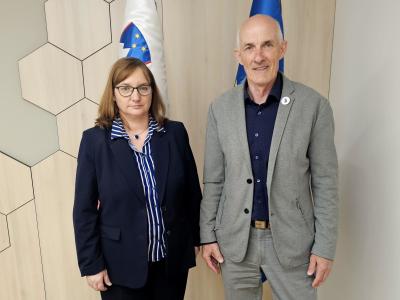
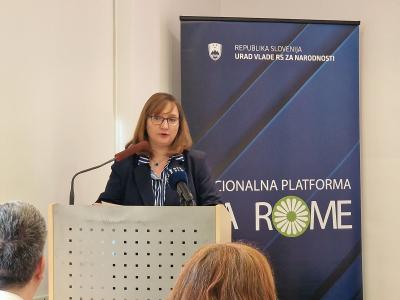
During the afternoon session on the first day, participants were addressed by the Deputy Ombudsman, Dr Dijana Možina Zupanc, while Žiga Kovač, an adviser, presented the Ombudsman’s activities and findings in the field of environmental and spatial protection.
In her speech, Dr Možina Zupanc emphasised that environmental and climate crises are not the result of a lack of regulations, but rather their inadequate implementation. She highlighted that one of the central problems of modern environmental decision-making is the systematic limitation of public participation. This is not merely a procedural shortcoming, but a serious threat to human rights. She pointed out that public participation in Slovenia is often merely formal; the public is involved too late; information is incomplete, opaque or difficult to access; and public comments are not addressed substantively. She stressed that citing time constraints or a lack of staff cannot and must not be used as an excuse to exclude the public from decision-making processes.
The Deputy Ombudsman also highlighted the broader international context of environmental protection, noting that similar issues are being observed by Ombudsman institutions in other European countries. “Environmental impacts know no national borders, so the responsibility of states cannot remain confined solely to national frameworks. That is precisely why, within the European Network of Ombudsmen this week, I called on my colleagues to conduct parallel investigations. This involves Ombudsman institutions from different countries collaborating on the investigation of common environmental issues. In this context, we have also opened a discussion on the possibility of jointly assessing how the Aarhus Convention is implemented in practice,” said Dr Dijana Možina Zupanc.
She further emphasised that judicial practice at European and international levels is increasingly confirming that a state’s failure to ensure a healthy living environment constitutes a human rights violation. The right to a healthy living environment is thus being established as a legally binding standard rather than a mere principle.
The Ombudsman has received an increasing number of complaints concerning the environment and spatial planning, indicating greater public awareness as well as systemic shortcomings in environmental management, as emphasised by adviser Žiga Kovač in his presentation on the Ombudsman’s activities in this field. When examining these cases, the Ombudsman frequently identifies recurring violations, such as inadequate public involvement, disregard for expert arguments, inadequately trained local decision-makers, and opaque and protracted procedures. He also highlighted key points from high-profile conferences on environmental protection organised by the Ombudsman in 2007, 2010, 2013 and 2017, as well as the Ombudsman’s long-standing cooperation with non-governmental organisations in the fields of the environment and spatial planning.
The conference brought together representatives from the legal and natural sciences, academia, civil society, state institutions and the business sector. Discussions addressed the gap between science and politics, legal safeguards for public participation, the role of the courts, specific environmental cases, and solutions to ensure more inclusive, transparent and accountable decision-making in future.

 Back
Back