The Human Rights Ombudswoman: “Without decent living conditions, there is no possibility for the free expression and development of one’s own identity.”


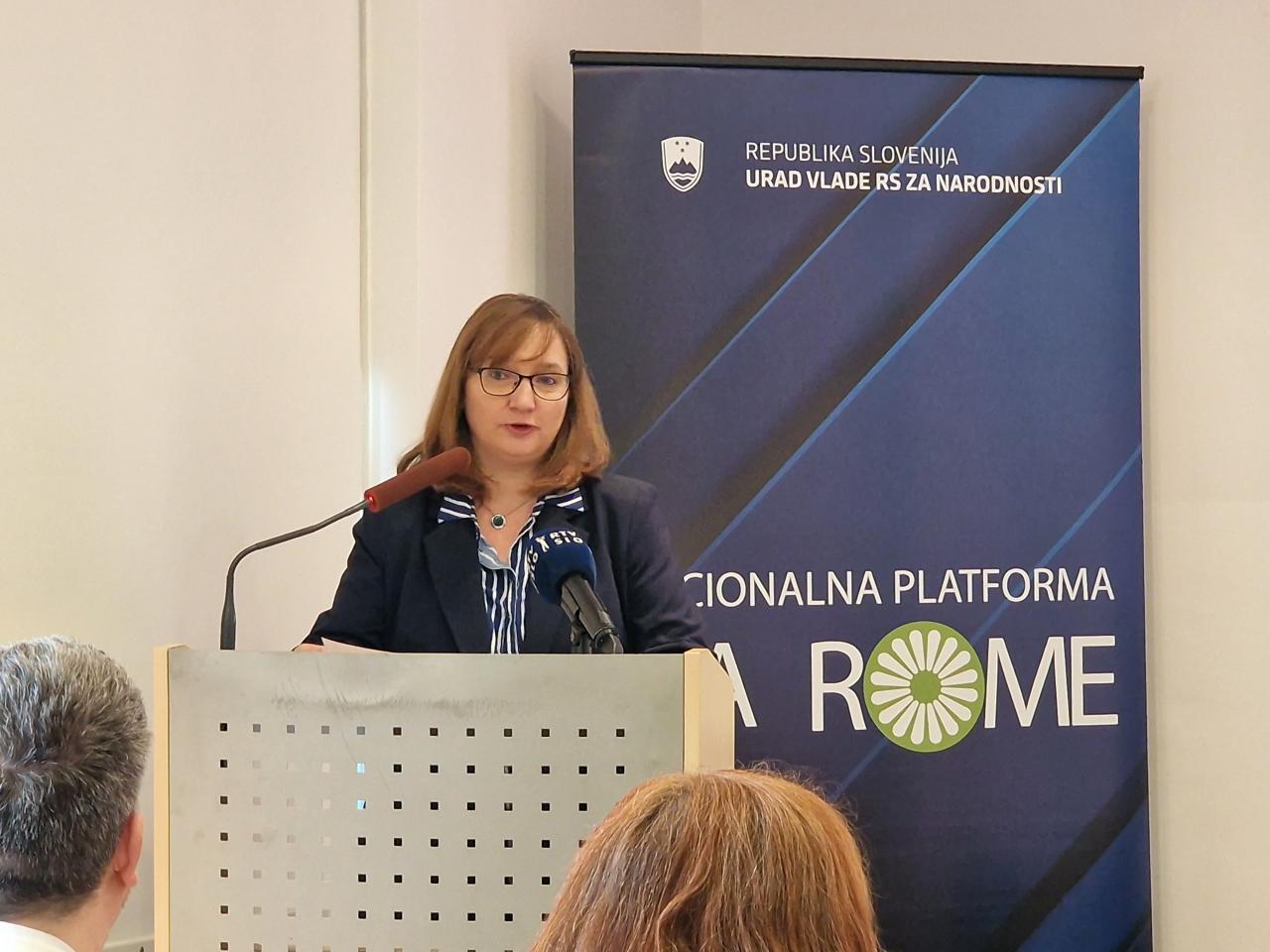
Speaking today, 14 April 2026, at the national conference The Importance of Strengthening Identity and Preserving Heritage in the Roma Community, held at the Slovenski etnografski muzej (Slovenian Ethnographic Museum), Dr Simona Drenik Bavdek emphasised that preserving the identity of the Roma community is a fundamental human rights issue, not merely a cultural one.
She highlighted that, while the legal framework at national and international levels clearly guarantees the right to preserve identity, language and culture, a significant gap persists between these enshrined rights and the actual situation. She stated that many members of the Roma community still live in inadequate housing, without access to basic infrastructure such as drinking water, electricity and sanitation, which infringes upon human dignity.
She specifically pointed to the field of education, where only around one-fifth of Roma children complete primary school, and the proportion is even lower in south-eastern Slovenia. Employment rates are also low, and disparities in healthcare are even more pronounced: the Roma community has poorer access to services and a shorter life expectancy.
“Without the basic conditions for a dignified life, it is difficult to expect a person to be able to freely express and develop their identity,” the Ombudswoman emphasised, warning that inadequate conditions and persistent prejudice cause long-term harm to both the Roma community and society as a whole.
The Ombudswoman also drew particular attention to the issue of intersectional discrimination. She highlighted that children, especially girls, are among the most vulnerable and are often victims of violence and abuse. She stressed that particular attention must also be paid to women, persons with disabilities, and older Roma, who are often overlooked. She emphasised that such multiple forms of discrimination require decisive action and stressed that violence and crime must not become part of any community’s identity. She also clarified that the special rights of the Roma community do not exempt individuals from responsibility for unlawful conduct.
She emphasised that comprehensive and long-term measures are essential to improve the situation—measures that simultaneously address education, housing, health and social inclusion. Cooperation between institutions, experts and the Roma community is also crucial.
Organised by the Slovenski etnografski muzej (Slovenian Ethnographic Museum), Romski akademski klub (Roma Academic Club) and the Office of the Government of the Republic of Slovenia for Nationalities, the conference opened a discussion on the importance of education and preserving Roma cultural heritage as key factors in identity and inclusion in society.
The Ombudswoman concluded by emphasising that respect for identity is inseparable from respect for human rights and that equal opportunities for all can only be realised by creating the conditions for a dignified life.
 Back
Back