‘Democratic elections must be an expression of the free and informed will of citizens,’ warned the Human Rights Ombudswoman.


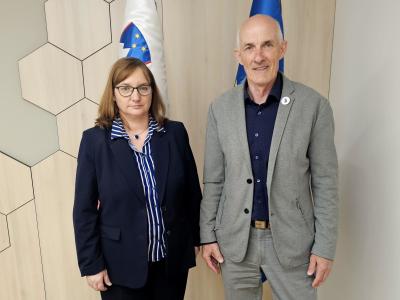
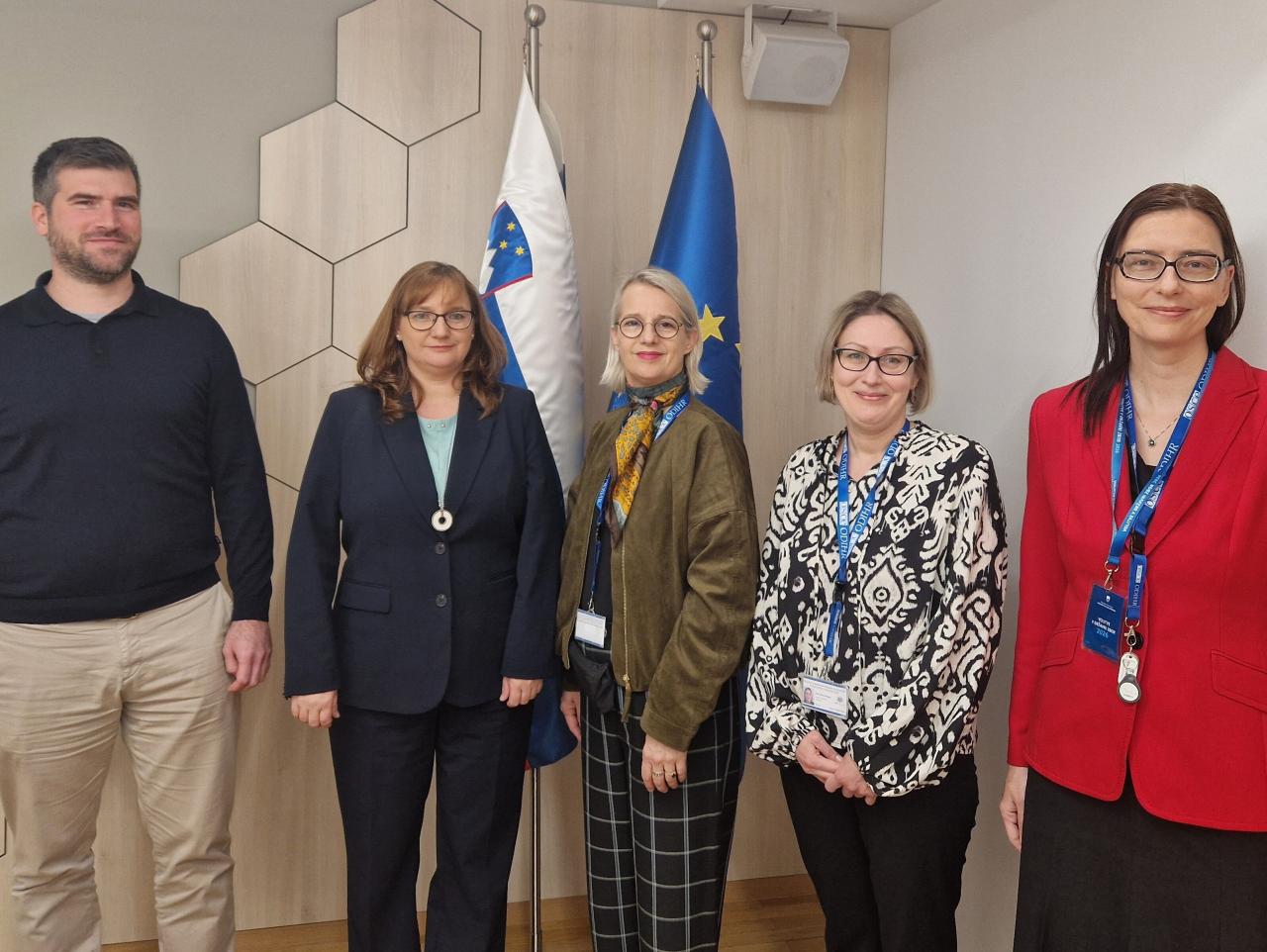
Dr Simona Drenik Bavdek, the Human Rights Ombudswoman, and her deputy Miha Horvat today received representatives of the OSCE/ODIHR Election Assessment Mission (Election Assessment Mission – EAM). Between 5 and 25 March 2026, the mission is conducting a comprehensive assessment of the legal and administrative framework for elections to the National Assembly of the Republic of Slovenia. Based on this assessment, the mission will issue recommendations for improvement; however, it will not carry out systematic observation on election day.
At the meeting with the OSCE/ODIHR mission, Ombudswoman Dr Drenik Bavdek emphasised that free and fair elections are the foundation of a democratic society. This right is also enshrined in Article 3 of Protocol No. 1 to the European Convention on Human Rights and obliges the state to ensure free and secret elections that guarantee the free expression of the people’s will in the choice of the legislature. Together with her deputy, Dr Drenik Bavdek presented the OSCE/ODIHR mission with the Human Rights Ombudsman’s key findings and previous recommendations regarding the protection of human rights in the electoral process. These included issues of freedom of expression and the prevention of hate speech, the fairness of elections, and the possibility for vulnerable groups, such as persons with disabilities, residents of social welfare institutions, hospitalised patients and detainees, to participate in elections. They also discussed providing adequate information to persons with disabilities, women’s participation in election campaigns, and early voting.
Dr Drenik Bavdek expressed concern over recently published recordings of the alleged surveillance of Slovenian citizens’ communications during the election campaign. She emphasised that such disclosures, appearing just a week or two before elections, can significantly affect public debate and voters’ political decision-making. Although it is clear that definitive opinions and decisions cannot be reached in such a short time, prompt action by the competent institutions is necessary. In order to protect human rights and the rule of law—which includes the fight against corruption—all aspects must be thoroughly investigated, including illegal recording, which may unjustifiably interfere with the right to privacy; the manner in which the recordings were obtained; their authenticity; the corruption risks arising from their content; and determining the commissioner or commissioners of the operation. This clearly constitutes an organised attempt (including by foreign actors) to influence elections and may interfere with the right to free elections. Dr Drenik Bavdek also informed the interlocutors that representatives of ombudsman institutions and national human rights institutions had discussed these risks and threats at a recent high-level conference of the Council of Europe. Participants concluded that foreign interference in elections and public opinion poses a serious and systematic threat to modern democracies. Propaganda, the spread of disinformation and targeted information manipulation can undermine trust in democratic institutions, deepen social divisions and hinder citizens’ ability to make informed decisions.
The Council of Europe has already recognised that the very achievements of open Western societies, such as the free flow of information and freedom of expression, also present opportunities for foreign actors seeking to spread propaganda, sow discord and destabilise democratic systems. The Committee of Ministers of the Council of Europe has recently established the Committee of Experts on Foreign Information Manipulation and Interference (PC-FIMI). The purpose of this committee is to counter such external influences, including through deterrence, prevention or at least limitation, while fully respecting human rights, democracy and the rule of law. The committee is currently examining options for developing a Council of Europe legal instrument that would criminalise certain acts related to foreign information manipulation and interference, as well as possible preventive and awareness-raising measures. The aim is to create a common legal framework to assist states in preventing and addressing these challenges.
“To maintain public trust in democratic processes, it is essential to ensure transparent and lawful conduct by all stakeholders. Only in this way can the integrity of, and the right to, free elections be safeguarded, ensuring that democratic elections are an expression of the free and informed will of citizens,” added Human Rights Ombudswoman Dr Simona Drenik Bavdek.
The Ombudsman has also taken a proactive approach in relation to these elections. At the beginning of the year, for example, she contacted the Ministry of Solidarity-Based Future and the National Electoral Commission to request clarification regarding the informing of providers of institutional care and long-term care about the possibility for residents to vote by mail. During visits to residential care institutions and through media reports, the Ombudsman became aware of allegations that some residents were unable to vote in the November 2025 referendum because their institutions had not received any notification about it. In this context, the Ombudsman requested that the Ministry of Solidarity-Based Future clarify how it had informed providers of institutional care and long-term care about the possibility of postal voting in the upcoming National Assembly elections. According to the Ministry, on 14 January 2026, it sent a letter to all providers of social welfare services and long-term care containing explicit instructions on how residents in institutional care could vote by mail.
In light of certain difficulties previously identified in the conduct of elections abroad, the Ombudsman contacted the National Electoral Commission at the beginning of March this year to request clarification regarding access to electoral materials for citizens of the Republic of Slovenia abroad. Following the Ombudsman’s intervention, the National Electoral Commission had reversed its initial decision not to organise a polling station at the Embassy of the Republic of Slovenia in Moscow for the National Assembly elections (see pp. 330–331 of the Ombudsman’s 2022 Annual Report for details). The Commission explained that voters with permanent residence abroad receive a blank ballot and that election materials for voters abroad (emigrants and expatriates) were dispatched to postal service providers in February; however, nearly one month after dispatch, some voters have still not received the materials. A particular challenge is that international postal delivery depends on the quality standards of foreign postal service providers, over which the Ombudsman has no authority. Nevertheless, the Ombudsman will continue to monitor such issues.
 Back
Back