The Ombudswoman draws attention to the urgent need to address pressing issues in Slovenian prisons


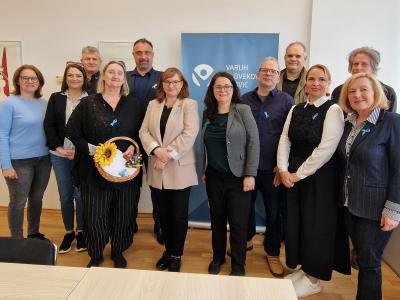
Human Rights Ombudswoman Dr Simona Drenik Bavdek and Deputy Ombudsmen Dr Dijana Možina Zupanc and Ivan Šelih, together with their colleagues, met today with the Director General of the Prison Administration of the Republic of Slovenia (URSIKS), Denis Peršet, and his colleagues, as well as representatives of representative trade unions of employees in the judiciary – the President of the Trade Union of Workers in the Judiciary, Tomaž Virnik, and the President of the Trade Union of State Authorities of Slovenia, Frančišek Verk. They discussed the staffing situation in prison establishments and possible solutions to the shortage of prison officers and other staff in prison establishments.
The Human Rights Ombudsman (the Ombudsman) has been drawing attention to prison-related issues in the country for several years. Problems arise both when dealing with initiatives from prisoners and during visits to prison establishments within the framework of the National Preventive Mechanism (NPM). Staff shortages are reflected in the increased workload of employees, overtime work becoming the rule rather than the exception, and greater stress among staff, which affects both the provision of security and the exercise of prisoners’ rights.
It is particularly worrying that staff shortages are leading to the cancellation of escorts of prisoners to courts, healthcare institutions and other external institutions. According to the Supreme Court of the Republic of Slovenia, almost 3,000 hearings and trials were cancelled in 2025 due to the cancellation of escorts. In addition to the unacceptable prolongation of court proceedings, the cancellation of escorts also results in more difficult access to healthcare services for prisoners.
The Ombudsman supports the efforts of URSIKS and both trade unions to improve the situation of prison officers, enhance their professional standing and, in principle, conclude a separate collective agreement. Ombudswoman Dr Drenik Bavdek emphasises the need for further systemic measures to ensure a sufficient number of employees in the prison system, as this is crucial both for the safety of staff and for respect for the rights of prisoners, as well as for the smooth functioning of the judicial system. “We will continue to pay particular attention to developments in this area, especially with regard to the situation of women and minors in the prison system,” emphasises the Ombudswoman.
In a conversation with Denis Peršet, Director General of URSIKS, representatives of the Ombudsman also addressed the situation in the only women’s prison in Slovenia, located in Ig, which has become increasingly concerning over the past year. Particular attention was drawn to the treatment of prisoners with intellectual disabilities, which can seriously jeopardise their personal safety as well as their physical and mental integrity and may, in the Ombudsman’s opinion, reach the threshold of inhuman or degrading treatment within the meaning of Article 3 of the European Convention on Human Rights. The Ombudsman has been drawing attention to this issue for several months through the National Preventive Mechanism and expects both swift individual solutions and systemic regulation of such situations.

 Back
Back