The Human Rights Ombudswoman Discusses the Need for Systemic Solutions to the Challenges Faced by People with Autism with Representatives of Non-Governmental Organizations


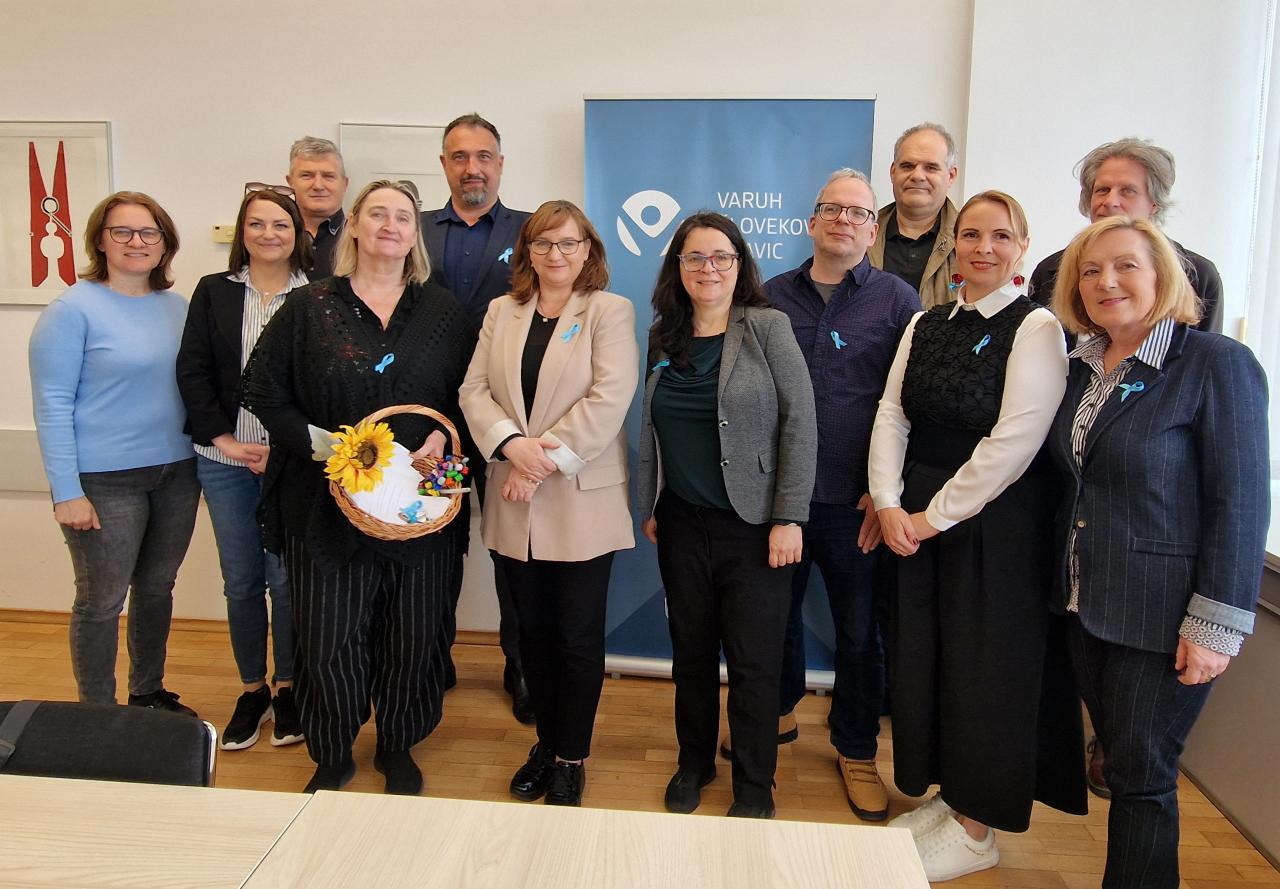
On World Autism Awareness Day, April 2, 2026, Human Rights Ombudswoman Dr Simona Drenik Bavdek met with representatives of non-governmental organizations working in the field of autism. They informed her of the key challenges faced by people with autism and their families, and presented her with a joint statement highlighting that autism in Slovenia remains systematically overlooked.
This time, the non-governmental organizations primarily highlighted that support for people with autism decreases significantly after they turn 18. Adults often have limited access to healthcare because there are not enough specialists in the field of autism; they remain undiagnosed and thus unable to assert their rights; their employment opportunities are reduced; and there are no suitable housing or socialization options available. According to them, the support system is fragmented, short-term, and largely project-dependent, lacking stable funding and a unified national strategy.
They specifically pointed out that many people with autism, despite their abilities and desire for independent living, remain dependent on their families, who often represent their only form of support. In this context, they also specifically highlighted the lack of personal assistance, inadequately adapted work environments, the absence of community-based living arrangements, and the lack of day centers where people with autism could develop their potential and maintain social contacts.
Non-governmental organizations also note that there is no systemic understanding of autism as a lifelong condition, that people with autism still face stigmatization, and that their challenges remain overlooked—just as their disability is often invisible. “Many would be able to live independently and contribute to society with assistance, but they cannot obtain it; as a result, quite a few people with autism also face social exclusion and end up on the streets. Families, meanwhile, are burning out and breaking under the weight of grief as we watch the bleak prospects for our children and adults with autism,” warned Maja Weiss, president of the ASPI association.
Non-governmental organizations highlight the need for a national strategy, stable funding for services, the development of professional staff, and the inclusion of people with autism in the development of policies that affect them.
The Ombudswoman meets with representatives of non-governmental organisations working in the field of autism to discuss the need for systemic solutions to the challenges faced by people with autism
On World Autism Awareness Day (2 April 2026), the Human Rights Ombudswoman, Dr Simona Drenik Bavdek, met with representatives of non-governmental organisations working in the field of autism. They informed her of the key challenges faced by people with autism and their families and presented her with a joint statement warning that autism continues to be systematically overlooked in Slovenia.
Non-governmental organisations primarily highlighted that support for people with autism decreases significantly after the age of 18. Adults often have limited access to healthcare due to a shortage of autism specialists, remain without a diagnosis and therefore without the possibility of exercising their rights, have reduced employment opportunities, and lack appropriate housing and social inclusion options. According to the organisations, the support system is fragmented, short-term and largely project-based, without stable funding and without a coherent national strategy.
They further pointed out that many people with autism, despite their abilities and desire for independent living, remain dependent on their families, who often represent their only form of support. Particular concern was also raised regarding the lack of personal assistance, inadequately adapted work environments, the absence of community-based living arrangements and the shortage of day centres where people with autism could develop their potential and maintain social contacts.
Non-governmental organisations also noted the absence of a systemic understanding of autism as a lifelong condition, that people with autism continue to face stigmatisation, and that their challenges remain overlooked, just as their disability is often invisible. “Many would be able to live independently and contribute to society with appropriate support, but they cannot access it. As a result, a significant number of people with autism face social exclusion and may even end up on the streets. Meanwhile, families are burning out and breaking under the weight of grief as we observe the lack of prospects for our children and adults with autism,” warned Maja Weiss, President of Društvo za podporo mladostnikom in odraslim z avtizmom (ASPI), an association supporting adolescents and adults with autism.
As key priorities, non-governmental organisations highlighted the need for a national strategy, stable funding of services, the development of professional capacities and the inclusion of people with autism in the preparation of policies affecting them.
The Ombudswoman dr Drenik Bavdek emphasised that the Ombudsman’s findings have for many years been consistent with the warnings of non-governmental organisations. She stated that the current situation is not only a matter of compliance with the principles of a social state, but also a matter of fulfilling international obligations. By signing the Convention on the Rights of Persons with Disabilities, Slovenia has undertaken a clear commitment to ensuring that people with disabilities, including those with autism, can fully enjoy all human rights on an equal basis. This includes the right to independent living and inclusion in the community, access to healthcare, education and employment, and appropriate support in exercising their rights. “If adults with autism remain without a diagnosis, without support and without the possibility of independent living, then we are no longer talking about gaps in the system, but about a failure to meet the obligations undertaken by the state,” emphasised Dr Simona Drenik Bavdek, Ombudswoman.
The Ombudsman therefore expects decision-makers to prepare a comprehensive national autism strategy that integrates healthcare, social services, education, employment and housing policy. The Ombudsman also expects the development of a network of community-based living arrangements, day centres and accessible personal assistance that is genuinely available to people with autism. “The state has long known where the problems lie, yet it continues to address them through individual programmes and relies on the dedication of individuals. What is missing is the decision to begin addressing them systematically. Autism is not a marginal issue, but a human rights issue,” stressed the Ombudswoman, also warning that the mere formal inclusion of people with autism in existing systems does not equate to actual access to rights. “Many people with autism can live independently, work and participate in society with support. It is therefore the responsibility of the state to ensure the conditions for this. This is not about privileges — it is about the basic conditions for a dignified life,” she added.
The Ombudswoman also highlighted the need for greater adjustments in the education system, as children with autism have limited opportunities for inclusion, including in music schools, and often lack adequate support or assistance. Opportunities in the labour market must also be expanded and efforts to eliminate discriminatory practices strengthened. She also drew attention to the particularly vulnerable position of people with autism in judicial proceedings, where they often lack the support needed to understand procedures and participate effectively. She emphasised the need for special attention to be paid to training staff and representatives of various institutions to work appropriately with people with autism, as well as to educating support professionals and ensuring that their work is adequately remunerated.
In conclusion, she stressed that the Ombudsman will continue to insist on the implementation of the Ombudsman’s recommendations and monitor the measures taken by the state. “The question is no longer whether we know what needs to be done. The question is whether we will finally do it.”
The meeting was attended by representatives of Zveza nevladnih organizacij za avtizem Slovenije (a national network of autism-related non-governmental organisations), Društvo za podporo mladostnikom in odraslim z avtizmom (ASPI), and Društvo Bodi zdrav (a non-governmental organisation in the field of health).
 Back
Back