Overview of the Ombudsman's activities in the field of ensuring the human rights of persons with disabilities / October–December 2025


Between October and December 2025, the Human Rights Ombudsman of the Republic of Slovenia (Ombudsman) dealt with various initiatives from people who contacted him regarding the protection of the human rights of persons with disabilities. He helped the initiators by explaining their rights and the legislation, and publicly drew attention to the rights of persons with disabilities. An overview of the various activities follows below.
The Ombudsman continues to address the issue of improving the material situation of persons with disabilities whose disability occurred before they entered employment, and the issue of inclusion in care, guidance, and employment services under special conditions for part-time work. In this regard, the Ombudsman met with the Ministry of Labor, Family, Social Affairs, and Equal Opportunities and the Ministry of Solidarity and the Future.The National Preventive Mechanism (NPM) continued to visit sheltered workshops
Between October and December 2025, a representative of the NPM[1] made several visits to sheltered workshops, namely thematic visits to the sheltered workshops in Črnomelj and Nova Gorica and an inspection visit to the sheltered workshop in Ajdovščina–Vipava. In addition, she also conducted a thematic visit to the company Želva, d. o. o.Participation in an international meeting on compulsory hospitalization in (pre-)criminal and civil proceedings
On November 5 and 6, 2025, a meeting of the Network of National Preventive Mechanisms (NPM) of South-Eastern Europe (SEE NPM Network) was held in Podgorica, Montenegro. The focus of this meeting of network members was on the findings of NPMs in individual countries regarding involuntary hospitalization in (pre-)criminal and civil proceedings. The event was organized by the Ombudsman of Montenegro and took place within the framework of Slovenia's presidency of the network. The Deputy Ombudsman and Head of the Slovenian NPM, Ivan Šelih, and member of the Slovenian NPM, Jure Markič, presented the specifics of the Slovenian regulation of involuntary hospitalization in (pre-)criminal proceedings and detention in so-called closed facilities to the meeting participants. Jure Markič, presented to the participants the specifics of the Slovenian regulation of involuntary hospitalization in (pre-)criminal proceedings and detention in the so-called closed ward of a psychiatric hospital or social welfare institution on the basis of the provisions of the Mental Health Act.
Meeting of the ENNHRI Working Group on the Rights of Persons with Disabilities
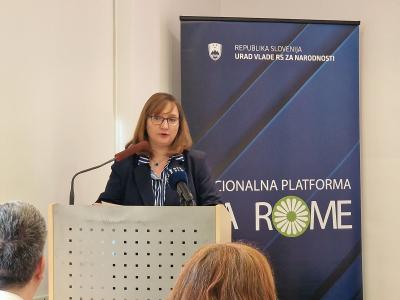
On December 15, Jerneja Turin, representative of the Human Rights Center at the Ombudsman's Office and chair of the ENNHRI Working Group on the Rights of Persons with Disabilities, organized and led a meeting of the group's members, which this time focused on the issue of declining support for persons with disabilities. Jerneja Turin, organized and chaired a meeting of the group's members on December 15, which this time focused on the issues of reducing support in education, monitoring the accessibility of newly constructed, reconstructed, and renovated buildings, and the use of collective complaints.
In November 2025, the European Union Agency for Fundamental Rights (FRA) published a comprehensive report on violence against persons with disabilities in institutional care in the EU, revealing widespread forms of violence, long-standing systemic shortcomings, and a culture of silence that makes it difficult for these persons to report abuse. For the purposes of the report, the Ombudsman shared his experiences and findings as a national human rights institution and as part of independent monitoring mechanisms. Upon the publication of the report, the Ombudsman emphasized that the FRA's findings confirm long-standing problems that he himself has highlighted in his regular annual reports and as the national preventive mechanism (NPM), which independently monitors places of deprivation of liberty in order to prevent torture, abuse, and inhuman treatment. Among other things, the NPM notes the absence of protocols for the prevention of violence, overcrowding in secure wards in social welfare institutions and wards under special supervision in psychiatric institutions, inadequate documentation of special protective measures, unlawful restrictions on movement, and poor information for users about their rights. The Ombudsman emphasizes that the situation in institutions points to the urgent need to accelerate the process of deinstitutionalization, strengthen independent oversight, ensure safe channels for reporting violence, and enable people with disabilities to live in dignity, safety, and equality.
The Ombudsman continues to address the issue of improving the material situation of persons with disabilities whose disability occurred before they entered employment, and the issue of inclusion in care, guidance, and employment services under special conditions for part-time work. In this regard, the Ombudsman met with the Ministry of Labor, Family, Social Affairs, and Equal Opportunities and the Ministry of Solidarity and the Future.The National Preventive Mechanism (NPM) continued to visit sheltered workshops
Between October and December 2025, a representative of the NPM[1] made several visits to sheltered workshops, namely thematic visits to the sheltered workshops in Črnomelj and Nova Gorica and an inspection visit to the sheltered workshop in Ajdovščina–Vipava. In addition, she also conducted a thematic visit to the company Želva, d. o. o.Participation in an international meeting on compulsory hospitalization in (pre-)criminal and civil proceedings
On November 5 and 6, 2025, a meeting of the Network of National Preventive Mechanisms (NPM) of South-Eastern Europe (SEE NPM Network) was held in Podgorica, Montenegro. The focus of this meeting of network members was on the findings of NPMs in individual countries regarding involuntary hospitalization in (pre-)criminal and civil proceedings. The event was organized by the Ombudsman of Montenegro and took place within the framework of Slovenia's presidency of the network. The Deputy Ombudsman and Head of the Slovenian NPM, Ivan Šelih, and member of the Slovenian NPM, Jure Markič, presented the specifics of the Slovenian regulation of involuntary hospitalization in (pre-)criminal proceedings and detention in so-called closed facilities to the meeting participants. Jure Markič, presented to the participants the specifics of the Slovenian regulation of involuntary hospitalization in (pre-)criminal proceedings and detention in the so-called closed ward of a psychiatric hospital or social welfare institution on the basis of the provisions of the Mental Health Act.
Meeting of the ENNHRI Working Group on the Rights of Persons with Disabilities
On December 15, Jerneja Turin, representative of the Human Rights Center at the Ombudsman's Office and chair of the ENNHRI Working Group on the Rights of Persons with Disabilities, organized and led a meeting of the group's members, which this time focused on the issue of declining support for persons with disabilities. Jerneja Turin, organized and chaired a meeting of the group's members on December 15, which this time focused on the issues of reducing support in education, monitoring the accessibility of newly constructed, reconstructed, and renovated buildings, and the use of collective complaints.
In response to the FRA report, the Ombudsman drew attention to the inadequate protection of persons with disabilities in institutions
In November 2025, the European Union Agency for Fundamental Rights (FRA) published a comprehensive report on violence against persons with disabilities in institutional care in the EU, revealing widespread forms of violence, long-standing systemic shortcomings, and a culture of silence that makes it difficult for these persons to report abuse. For the purposes of the report, the Ombudsman shared his experiences and findings as a national human rights institution and as part of independent monitoring mechanisms. Upon the publication of the report, the Ombudsman emphasized that the FRA's findings confirm long-standing problems that he himself has highlighted in his regular annual reports and as the national preventive mechanism (NPM), which independently monitors places of deprivation of liberty in order to prevent torture, abuse, and inhuman treatment. Among other things, the NPM notes the absence of protocols for the prevention of violence, overcrowding in secure wards in social welfare institutions and wards under special supervision in psychiatric institutions, inadequate documentation of special protective measures, unlawful restrictions on movement, and poor information for users about their rights. The Ombudsman emphasizes that the situation in institutions points to the urgent need to accelerate the process of deinstitutionalization, strengthen independent oversight, ensure safe channels for reporting violence, and enable people with disabilities to live in dignity, safety, and equality.
[1] The task of the National Preventive Mechanism (which was established within the framework of the Ombudsman on the basis of the Optional Protocol to the Convention against Torture and Other Cruel, Inhuman or Degrading Treatment or Punishment) is to visit places of deprivation of liberty in the country and to monitor the treatment of persons deprived of their liberty, with a view to strengthening their protection against torture and other forms of cruel, inhuman, or degrading treatment or punishment.

 Back
Back