Ombudswoman Attends High-Level Council of Europe Conference on the Role of Ombudsman Institutions and National Human Rights Institutions in Addressing Contemporary Threats to Democracy


Human Rights Ombudswoman Dr Simona Drenik Bavdek, together with Deputy Ombudsman Miha Horvat, attended the Second Council of Europe High-Level Conference on the Role of Ombudsman Institutions and National Human Rights Institutions in Strasbourg on 12 and 13 March 2026 (the Slovenian Human Rights Ombudsman is an institution combining both mandates). The event brought together representatives of such institutions from across Europe, judges of the European Court of Human Rights, and human rights experts to discuss key challenges facing democracy, the rule of law and the protection of human rights.
The discussion focused largely on the future of democracy in light of emerging threats such as disinformation and foreign interference in elections, as well as the growing trend of securitisation – that is, measures aimed at ensuring national security that disproportionately and impermissibly interfere with established human rights standards. Ombudsman institutions and national human rights institutions were recognised as key pillars of democratic resilience.
Among the major contemporary threats to democracy, weak respect for the rule of law was highlighted, both in procedural terms and through the erosion of independent institutions of democratic oversight. In an increasing number of European countries, independent institutions are facing various pressures – ranging from reductions in funding to discrediting campaigns on social media and the spread of disinformation about their work.
Foreign interference in elections and public opinion poses a systemic threat to modern democracy, public trust in democratic institutions and democratic values. Respect for human rights, including international standards, is therefore crucial for safeguarding democratic systems. Propaganda and the manipulation of public opinion were also highlighted as serious threats that divide societies and undermine democracy and respect for human rights, as they deepen social divisions while individuals increasingly struggle to distinguish between reliable information, fake news and disinformation.
The conference reaffirmed the crucial role of ombudsman institutions and national human rights institutions in safeguarding democracy, the rule of law and the effective protection of human rights in Europe, as well as the importance of cooperation between national institutions, the Council of Europe and the European Court of Human Rights.
“The discussion clearly showed that securitisation, the weakening of the rule of law, the increasingly widespread interference with human rights and freedoms, and unacceptable attempts at (foreign) interference in elections – challenges we are also facing in Slovenia – are not specific to Slovenia, but represent a serious threat to democracy across Europe and beyond. Participants agreed that human rights ombudsman institutions and national human rights institutions must further strengthen their mutual cooperation and actively advocate respect for substantive constitutional democracy and human rights. Skepticism towards the standards of human rights and freedoms achieved over centuries is increasing, and our role is to warn that the weakening of the rule of law and constitutional democracy brings not only fewer freedoms and rights – first for various minorities and later for everyone else – but also the rise of increasingly authoritarian governance, where decision-making becomes ever more arbitrary,” emphasised Human Rights Ombudswoman Dr Simona Drenik Bavdek on the margins of the conference.
The conference was opened by Deputy Secretary General of the Council of Europe Bjørn Berge, and participants were also addressed by Ambassador Daniela Cujbă, Chair of the Committee of Ministers of the Council of Europe. The keynote speech was delivered by Egils Levits, former President of Latvia and former judge of the European Court of Human Rights.
The first day of the conference was devoted to discussions on current challenges facing democratic systems. Participants addressed foreign influence on democratic processes, the weakening of systems of checks and balances, and the involvement of young people in human rights protection processes. Representatives of ombudsman institutions, national human rights institutions, as well as agencies of the European Union and the Council of Europe took part in the discussions.
The second day of the conference, held for the first time at the European Court of Human Rights (ECtHR), focused on the role of the Court in this new context, the importance of the execution and implementation of its judgments, and the role of national institutions in relation to the Court. Particular attention was devoted to strengthening the Convention system, freedom of expression, third-party interventions before the Court, and the dissemination of the Court’s case law and the execution of ECtHR judgments.
The President of the Court, Mattias Guyomar, emphasised that ombudsman institutions and national human rights institutions are natural allies of the ECtHR. The Council of Europe Commissioner for Human Rights, Michael O’Flaherty, stressed the importance of states taking positions in current debates on the European Convention on Human Rights in support of the independence of decision-making of both the ECtHR and national courts.
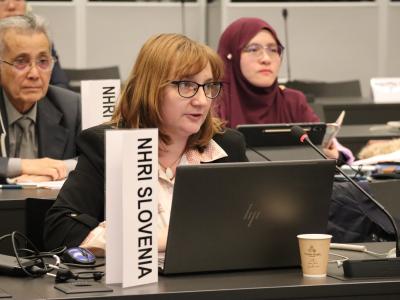
At the conference, Human Rights Ombudswoman Dr Simona Drenik Bavdek participated as an invited speaker in a discussion on the execution of ECtHR judgments and the role of national human rights institutions and ombudsman institutions in this process. In her remarks, she highlighted the importance of these institutions playing an active role in monitoring the execution of the Court’s judgments, raising public awareness and encouraging state authorities to fulfil their obligations arising from the judgments in a timely and comprehensive manner.
She also emphasised that consistent and timely execution of ECtHR judgments is an important indicator of the functioning of the rule of law in a given country.
“Judgments of the European Court of Human Rights not only ensure the protection of individuals’ rights in specific cases but often also require systemic changes to legislation, practice or the functioning of state institutions, thereby strengthening democratic standards and preventing the recurrence of human rights violations. Slovenia can serve as an example to other states in the execution of the Strasbourg Court’s judgments,” said Ombudswoman Dr Drenik Bavdek.
She also noted that national human rights institutions and ombudsman institutions can contribute significantly to more consistent and effective execution of judgments by raising public awareness of the Court’s case law, monitoring the implementation of judgments at the national level, and providing independent information to the Committee of Ministers of the Council of Europe. Such activities help identify systemic problems and encourage state authorities to adopt appropriate measures.
The conference was also attended by Dr Vasilka Sancin, the Slovenian judge at the ECtHR, who presented on third-party interventions before the Strasbourg Court and the role of ombudsman institutions and national human rights institutions. She highlighted that the Slovenian Human Rights Ombudsman represents an example of good practice, having so far intervened as an independent third party in two cases (Trunk v. Slovenia and X and Others v. Slovenia). In addition, several independent interventions have also been submitted to the Court by the European Network of National Human Rights Institutions (ENNHRI).
The day before the conference, on 11 March 2026, Ombudswoman Dr Drenik Bavdek, as a member of the ENNHRI Executive Board, also attended a meeting between the leadership of ENNHRI and the leadership of the European regional branch of the International Ombudsman Institute (IOI), where discussions focused on strengthening mutual cooperation.
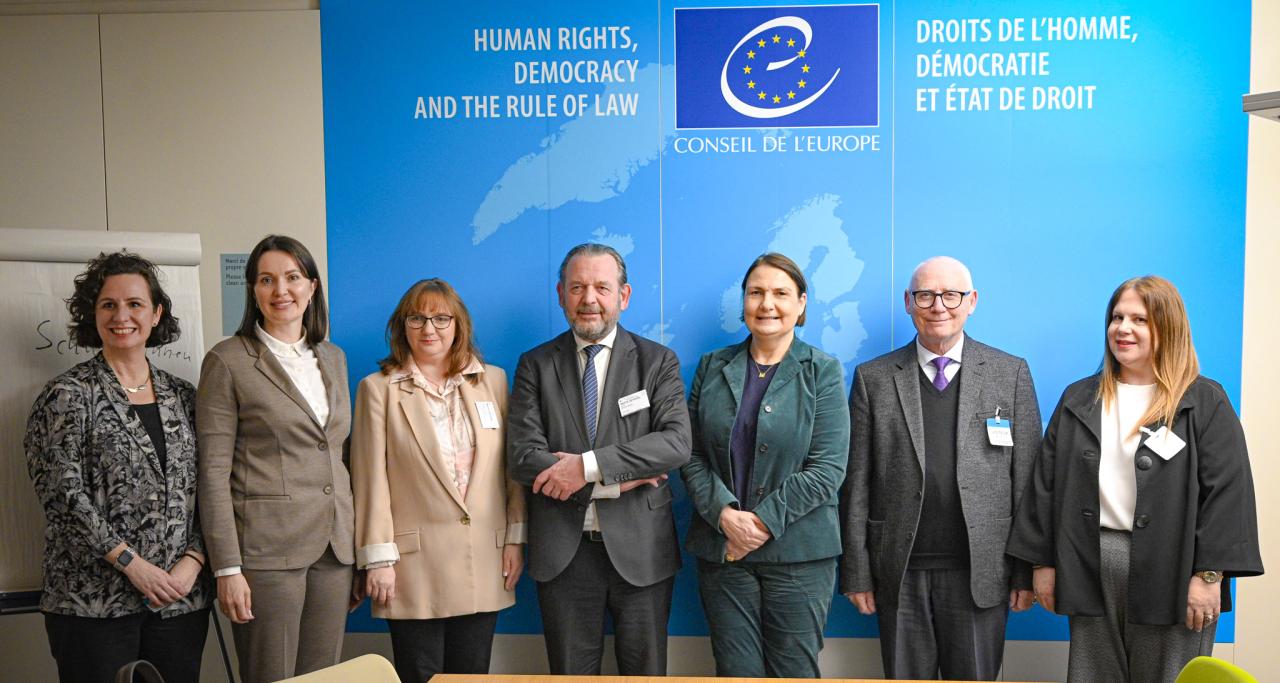
On the margins of the conference, together with Deputy Ombudsman Horvat, she also met with Slovenian Ambassador to the Council of Europe Berta Mrak, Council of Europe Commissioner for Human Rights Michael O’Flaherty, Slovenian judge at the ECtHR Dr Vasilka Sancin, the Secretaries General of ENNHRI and IOI, and numerous human rights ombudsmen and heads of national human rights institutions, with whom they exchanged experiences, best practices and views on trends and developments across Europe.



 Back
Back