Access to treatment for children with rare diseases must be organized systematically, rather than depending on donations


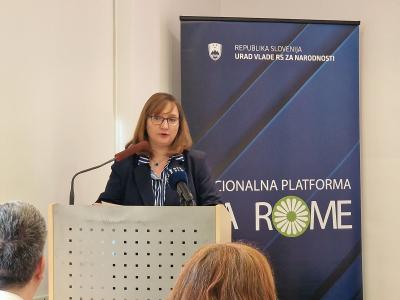
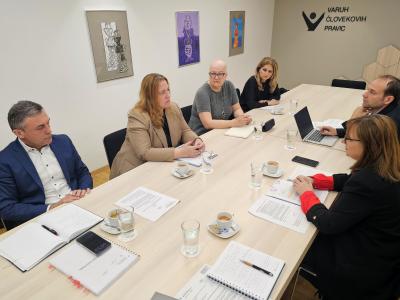
Deputy Ombudsman Dr. Dijana Možina Zupanc warned today, February 3, 2026, at the 65th session of the National Council Commission for Social Protection, Labour, Health and Disability, warned that the existing healthcare system often fails to provide children with rare diseases with timely, equal and predictable access to modern treatment, which is why the Human Rights Ombudsman (Ombudsman) supports the establishment of the Republic of Slovenia Fund for Rare Diseases.
The Ombudsman has been monitoring the field of rare diseases for many years and has found that, in certain cases, the existing compulsory health insurance mechanisms do not allow rapid access to medicines or treatment, which is unacceptable for children with rare and rapidly progressing diseases.
The Ombudsman therefore cannot agree with the Government's opinion that patients with rare diseases in Slovenia are already adequately cared for under compulsory health insurance, as systemic gaps in practice lead to delays, uncertainty, and unequal treatment of patients. The direct consequence of this situation is donation campaigns and civil initiatives that replace the role of the state and make access to treatment dependent on the financial capabilities of individual families rather than on the medical needs of the child.
"Such an arrangement is not consistent with the principle of equality before the law, the Constitution of the Republic of Slovenia, and the Convention on the Rights of the Child, as access to treatment should not be based on charity, but should be systematically and predictably regulated," emphasized Dr. Možina Zupanc. The Ombudsman worked hard to establish the Register of Rare Non-Malignant Diseases and welcomes the fact that it has finally been established.
The Ombudsman has worked hard to establish a Register of Rare Non-Malignant Diseases and welcomes the fact that it has finally been established. However, he emphasizes that this is only the first step and that without clear decision-making mechanisms and stable funding, the register alone does not guarantee the right to treatment.
"The Ombudsman is merely pointing this out because, unfortunately, we often see that when a legal framework is established, it is unacceptable from the perspective of the rule of law and legal certainty that only after the law has come into force is consideration given to how it will be implemented in practice. The mechanisms for implementation and safeguards for the protection of individuals must be clearly defined when the legislation is adopted. Considering these issues only after the law has come into force represents a serious departure from the fundamental principles of the rule of law and often leads to precisely those difficulties that the Ombudsman encounters in practice," the Deputy Ombudsman emphasized.
She added that the Ombudsman will continue to insist that the issue of rare diseases be treated as a fundamental human rights issue and a responsibility of the state, as children with rare diseases should not become victims of systemic gaps or delays in decision-making.

 Back
Back