“We speak a great deal about protecting vulnerable groups, but do far too little,” says the Human Rights Ombudswoman


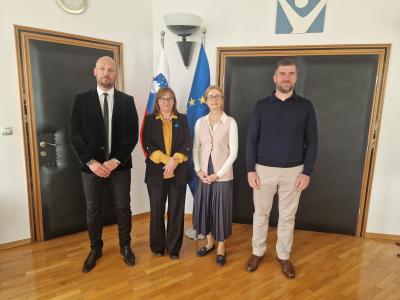
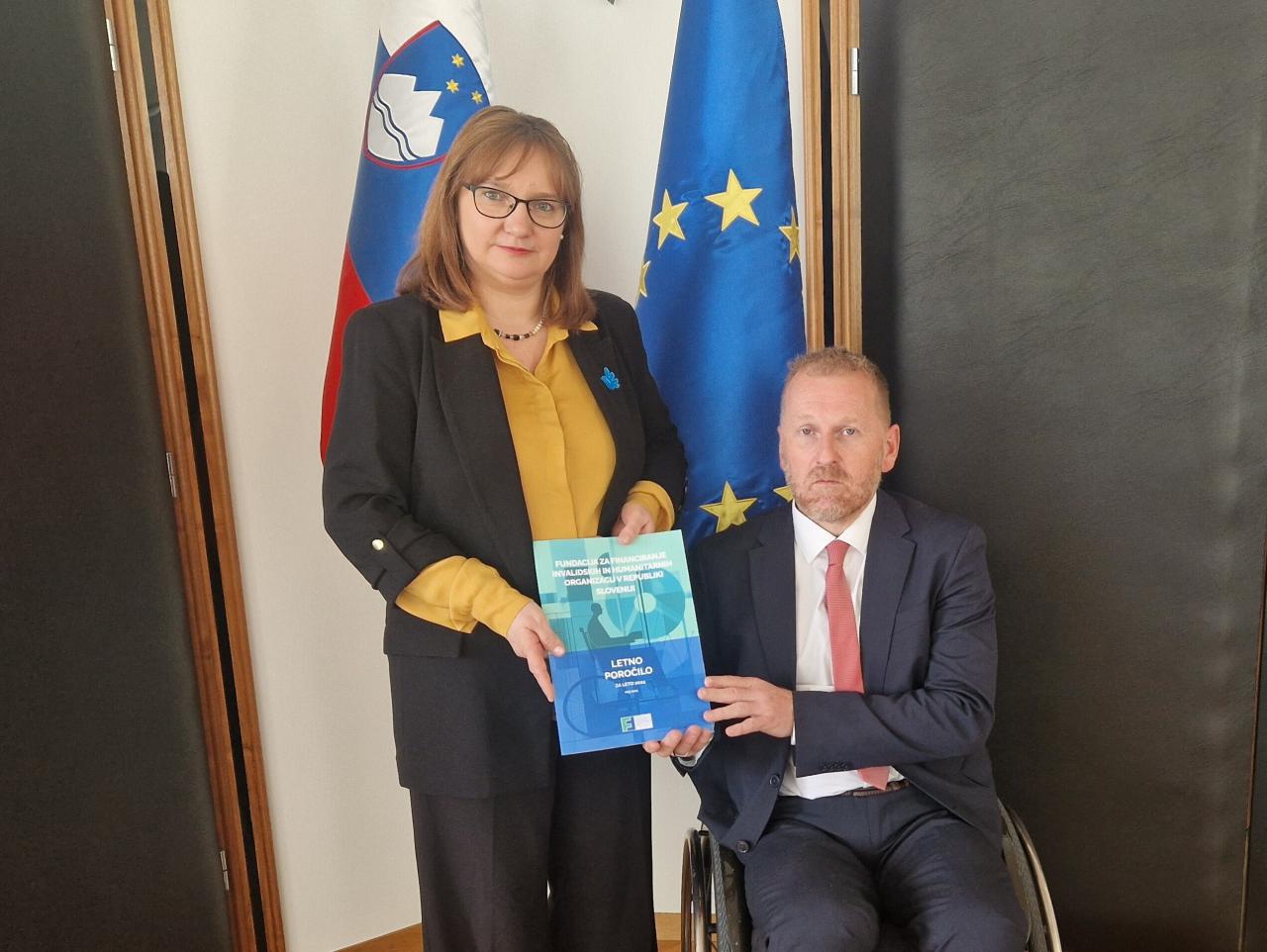
At today’s meeting (10 April 2026), Human Rights Ombudswoman Dr Simona Drenik Bavdek and Borut Sever, Director of the Foundation for the Financing of Disability and Humanitarian Organisations in the Republic of Slovenia (FIHO), outlined a framework for cooperation between the two institutions in caring for Slovenia’s most vulnerable residents.
At the outset, Dr Drenik Bavdek emphasised that the institution of the Human Rights Ombudsman has for years identified the insufficient protection of vulnerable groups—including persons with disabilities, older people, the socially disadvantaged and children—as a particularly pressing issue. “This is an area where we talk a lot but take far too little action. Despite progress in many areas, the most vulnerable members of our society continue to face barriers in accessing services, encounter services that are inadequately adapted, and lack sufficient institutional support,” said the Human Rights Ombudswoman, as she has already done on several occasions during her still recent term of office.
Borut Sever explained that FIHO co-finances programmes of disability and humanitarian organisations involving more than 400,000 individuals in distress. “Within the framework of the annual call for co-financing, we distribute approximately 25 million euros; however, to cover all identified needs, at least the same amount again would be required,” he said.
Many public buildings remain inaccessible to persons with mobility impairments, and public passenger transport—particularly intercity transport—is not yet fully adapted to their needs. Sever stressed that accessible public passenger transport is precisely what enables the most vulnerable members of society to exercise their fundamental human rights, as it ensures access to education, healthcare, culture and sport—in other words, to the enjoyment of other human rights. They agreed that ensuring these basic conditions for the independent living of persons with disabilities is an urgent priority for our society and that the two institutions will jointly draw the attention of the competent authorities to this issue.
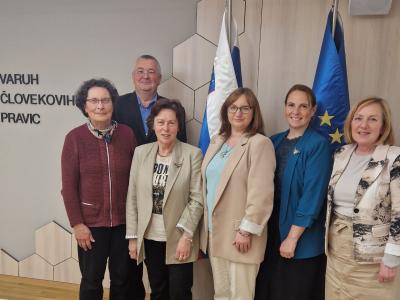
Also participating in the meeting were Jerneja Turin, Assistant Head of the Human Rights Centre and Head of the Working Group on the Convention on the Rights of Persons with Disabilities of the European Network of National Human Rights Institutions (ENNHRI), Dr Kornelija Marzel, Secretary General of the Council of the Human Rights Ombudswoman, and Mateja Jakša.
The Ombudswoman drew attention to the shortcomings of the Personal Assistance Act and to issues related to the implementation of the Long-Term Care Act, which are causing significant uncertainty and distress, and assured those present that the Ombudsman will continue to strive for the realisation of the rights that these two acts are intended to guarantee. Jerneja Turin presented the preparation of a study on the independent living of persons with disabilities and highlighted the importance of introducing a system of supported decision-making, a topic that is not yet being addressed in Slovenia.
As the Human Rights Ombudsman (the Ombudsman) has repeatedly emphasised, it is crucial to unify and harmonise the definition of disability across all relevant legislation, as the current situation creates legal uncertainty and unequal treatment of individuals and is not in line with the Convention on the Rights of Persons with Disabilities (CRPD). The current definition of disability in Slovenia is still predominantly based on the medical model, deriving mainly from medical indications and diagnoses rather than from the actual barriers individuals face when participating in society—that is, from the perspective of the protection and realisation of human rights. Under the CRPD, the definition of disability is based on the social model of disability, grounded in human rights, and emphasises the importance of the individual’s needs and the removal of social, environmental and systemic barriers.
 Back
Back