

"Together with the Association of Paraplegics, we will draw attention to human rights violations affecting paraplegics," emphasised Dr Simona Drenik Bavdek


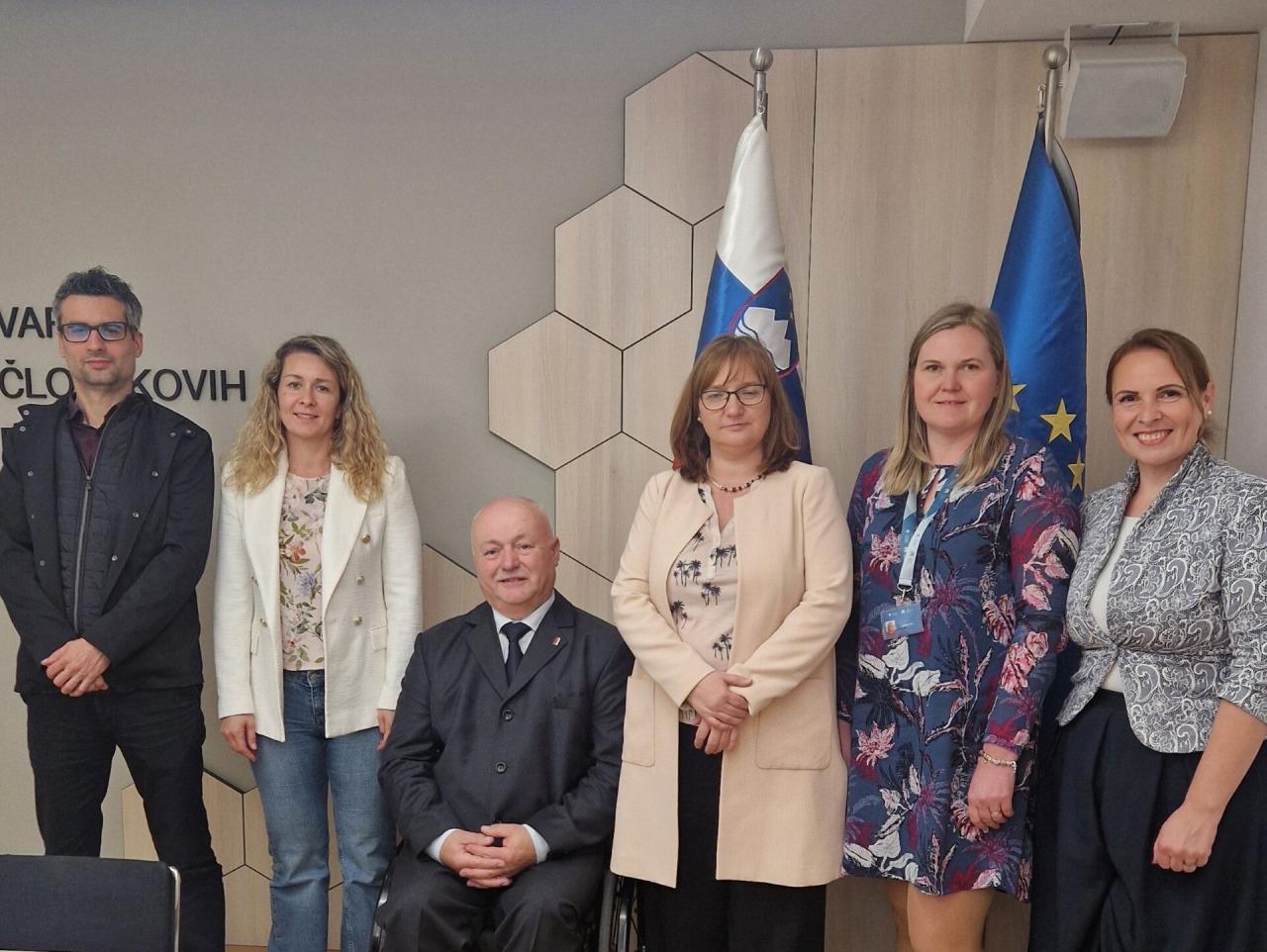
Today, 7 April 2026, the Human Rights Ombudswoman Dr Simona Drenik Bavdek and Deputy Ombudsman Dijana Možina Zupanc met with Dane Kastelic, President of the Association of Paraplegics of Slovenia. Mr Kastelic presented several of the most pressing areas in which the human rights of paraplegics are being violated.
The meeting was also attended by Kristina Milar, adviser at the Human Rights Ombudsman (the Ombudsman), and Špela Šušteršič and Matej Verbajs, representatives of the Association of Paraplegics.
The participants agreed that it is unacceptable that a large number of public buildings in Slovenia remain inaccessible to persons with mobility impairments. Dr Drenik Bavdek assessed that there is still a significant gap in Slovenia between the normative framework and the actual situation in this area. “Under the Equalisation of Opportunities for Persons with Disabilities Act, all buildings in public use should have been universally accessible by 11 December last year, but examples from practice show that this is not the case,” she said. Intercity public passenger transport is also not adapted for persons with mobility impairments.
Kastelic drew attention to long waiting times for medical examinations required to obtain a driving licence, as paraplegics can undergo such examinations exclusively at the University Rehabilitation Institute of the Republic of Slovenia – Soča (URI Soča). He also highlighted the specific issues faced by paraplegics in medically assisted reproduction procedures, as they are not granted funding for the more effective procedure of electroejaculation, which is otherwise unsuitable for other insured persons.
Representatives of the Association of Paraplegics also drew attention to shortcomings of the Long-Term Care Act, which does not ensure care for all those who need it. They also highlighted shortcomings of the personal assistance system in terms of the rigidity of requirements regarding knowledge of the Slovenian language for personal assistants. The Ombudswoman confirmed that she is aware of numerous systemic problems in this area. She confirmed that the Ombudsman will continue to draw attention to these issues and call for systemic changes.
According to the Ombudsman, the key problems are an acute shortage of staff and capacities in the fields of health care and social protection. This is reflected at all levels – including hospital and nursing care, institutional care, as well as other forms of support services provided in the home environment. The participants agreed that changes to the personal assistance system are needed to take staffing issues into account and address them effectively.
The Association of Paraplegics submitted two initiatives to the Ombudsman relating to the notification by the Pension and Disability Insurance Institute of Slovenia (Zavod za pokojninsko in invalidsko zavarovanje – ZPIZ) of the anticipated date of fulfilment of the conditions for an old-age pension, as they assess that their members’ human rights are being violated in this regard.
The participants agreed to actively engage in joint efforts to address the issues discussed as soon as possible.
 Back
Back