

Human Rights Ombudswoman: "Roma women and men also need better access to healthcare services"


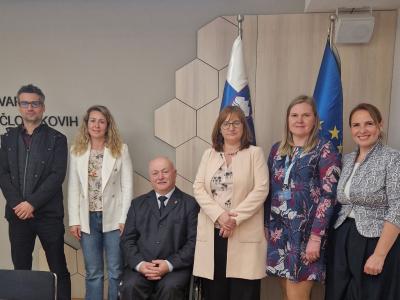
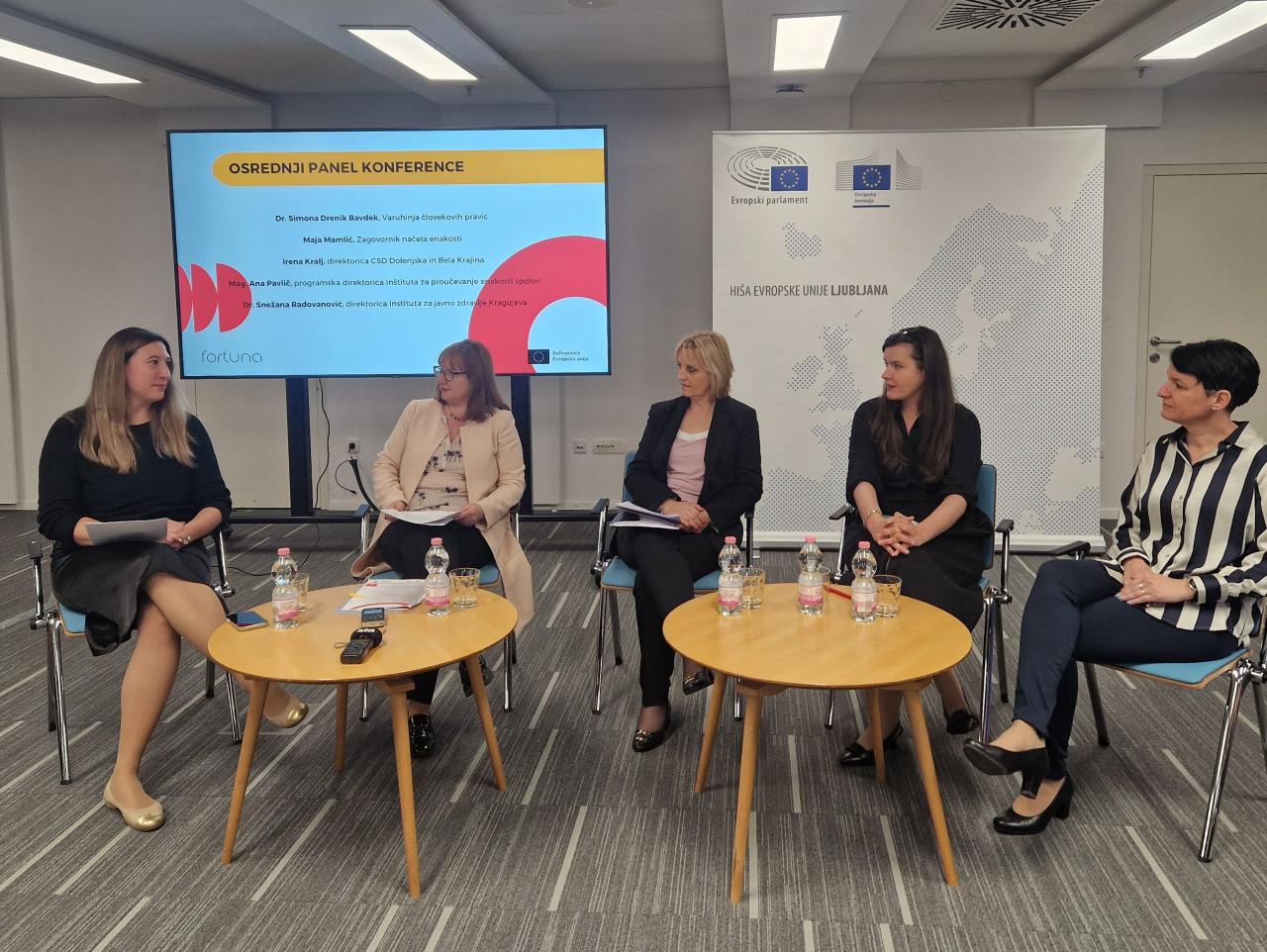
On 7 April 2026, Dr Simona Drenik Bavdek, the Human Rights Ombudswoman, attended the international closing conference of the FORTUNA project. The conference was titled Promoting Inclusive and Non-Discriminatory Access to Healthcare Services and took place at the House of the European Union in Ljubljana. She participated in the main panel, From Findings to Action: A Vision for Future Systemic Changes, in which participants discussed key systemic barriers to access and the measures needed to improve healthcare services for the Roma community and other vulnerable groups. Dr Drenik Bavdek emphasised that Roma women and men also need better access to healthcare services.
She stated that the Human Rights Ombudsman of the Republic of Slovenia (the Ombudsman) has identified recurring violations of the right to healthcare for many years. These violations are most evident in access to a personal physician, long waiting times, and unequal access to services depending on place of residence, social status, or digital literacy. She added that it is particularly problematic that vulnerable groups are often forced into inadequate, temporary solutions that do not ensure continuity of care or a relationship of trust.
She emphasised that such conditions are even more pronounced among Roma, where inequalities are not only health-related but also deeply structural. She drew attention to alarming data from the National Institute of Public Health of the Republic of Slovenia (NIJZ) from 2018. “These show that the average life expectancy for Roma men is approximately 48 years and for Roma women 63 years, which is at least 20 years less than the national average. Premature mortality among Roma reaches 69%, compared to 19% in the general population. Mortality among Roma children aged one to five is seven times higher than the national average,” the Ombudswoman explained. She added that, according to these data, Roma are disproportionately affected by respiratory diseases, infectious diseases, and diseases of the circulatory and digestive systems, while Roma women are more frequently hospitalised in connection with pregnancy and childbirth.
According to her, the Ombudsman has identified serious systemic shortcomings on the part of the state. There is no comprehensive and measurable programme to improve the health of the Roma community. The existing national framework neither enables effective monitoring of progress nor is based on adequate data. Another problem lies in weak oversight mechanisms and the absence of long-term planning, particularly in the area of human resources. In her view, ad hoc measures and temporary organisational solutions cannot replace systemic approaches, as they do not address the root causes of inequality.
She was particularly critical of the impact of inadequate living conditions, as access to drinking water, sanitation, and electricity is still not ensured in certain Roma settlements. These conditions directly threaten people’s health and dignity and constitute a serious violation of human rights.
She pointed out that the prolonged inaction of the competent authorities, despite clear warnings from the Ombudsman, indicates a systemic failure of the state. The state is not making use of all available legal and administrative mechanisms to protect the fundamental human rights of all residents in mixed areas. She also highlighted problematic practices of making access to basic living conditions, such as drinking water, conditional, which raises serious questions of discrimination and unequal treatment.
Furthermore, she stated that the formal right to healthcare does not guarantee access in practice. Without effective oversight mechanisms and measurable indicators, it is not possible to assess progress or the accountability of decision-makers. She therefore emphasised the need to involve patient rights advocates in the formulation of health policy.
“The right to health must not depend on a postcode, digital literacy, or social status. If it does, then society is not inclusive, but exclusionary,” said the Human Rights Ombudswoman Dr Simona Drenik Bavdek. In concluding the discussion, she added that real change requires a shift from partial measures to comprehensive, time-bound, and measurable systemic solutions based on accountability, transparency, and respect for human rights for all, without exception.
The conference, organised on World Health Day and Roma Day, was held by a project partnership consisting of IPES – Institute for Gender Equality; Health Centre dr Adolfa Drolca Maribor, a public healthcare institution in Maribor; Institut za javno zdravlje Kragujevac, a public health institute in Kragujevac, Serbia; Center za razvoj trajnostne družbe, a centre for the development of a sustainable society; and Obrazovno-kulturna zajednica Romanipen, an educational and cultural community Romanipen. The aim was to present the project’s results and discuss future systemic solutions for ensuring equal and inclusive healthcare. Representatives of public institutions, the healthcare sector, civil society, research organisations, and international partners discussed the intersection of social, economic, and gender-based factors of inequality in access to healthcare services.
Moderated by Kaja Primorac, the panel also included Irena Kralj, Director of Center za socialno delo Dolenjska in Bela krajina, a social work centre covering the Dolenjska and Bela krajina regions; Ana Pavlič, Programme Director at the Institute for Gender Equality Studies; and Dr Snežana Radivojević, Director of the Institut za javno zdravlje Kragujevac.
 Back
Back