The Ombudsman's Annual Report for 2024 reveals systemic bottlenecks and the need for state action


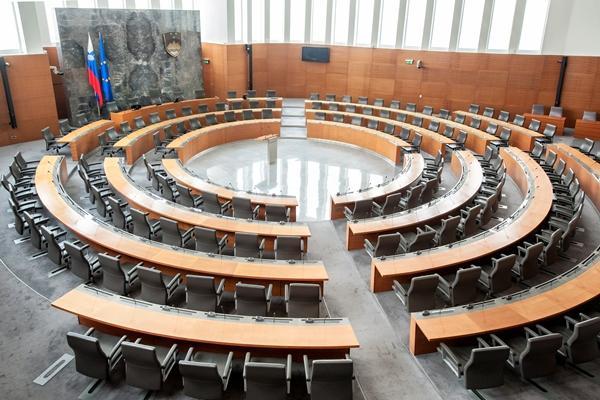
Today, 25 November 2025, Deputy Ombudsmen attended the plenary session of the National Assembly, at which, on behalf of the institution of the Ombudsman of the Republic of Slovenia (Ombudsman), Deputy Ombudsman Miha Horvat presented some highlights from the 30th regular Annual Report of the Ombudsman for 2024 and the Report of the National Preventive Mechanism (NPM) for the same year.
In 2024, the Ombudsman handled 6,288 cases, including more than 3,100 complaints, and found 174 violations of human rights and other irregularities. The most common violations related to inefficient administration, delays in procedures, inequality before the law, and problems in the areas of social security, healthcare, and the rights of people with disabilities and children.
In 2024, the Ombudsman identified 174 human rights violations and other irregularities. "Although the number seems relatively low compared to the number of all cases handled, it is important to remember that individual violations often go beyond just one case: some are systemic, affecting broader groups of people or even the entire legal order," Deputy Ombudsman Horvat pointed out.
In doing so, he pointed to three key systemic cases from the report. The first was a case when the Ombudsman successfully challenged before the Constitutional Court a provision that allowed the use of tracking devices in financial investigations. The Constitutional Court ruled that it was unconstitutional because it was not sufficiently clear and specific.
The year 2024 was strongly marked by a medical strike, which temporarily prevented disabled people from renewing their driving licences at the URI SOČA. In this situation, the Ombudsman did not stop calling for the right to strike to prevail absolutely, especially if the rights of one of the most vulnerable social groups, i.e. disabled people, are on the other side. Following the Ombudsman’s persistent calls, inspections were enabled again in the spring of 2024.
Deputy Ombudsman Horvat recalled another systemic success of the Ombudsman, namely the judgment of the European Court of Human Rights (ECHR) in the case of X and Others v. Slovenia. This confirmed the Ombudsman's positions on violations of the right to a fair trial and the right to private and family life. In addition to paying compensation, Slovenia must also implement systemic measures to prevent similar violations from recurring.
He also recalled some other specific, very personal and particularly lengthy cases, including the one when the Ministry of Education decided on an application for the write-off of a scholarship debt from 2017 only after seven years. He also pointed out that procedures at administrative units often lasted several months even for the least demanding actions, and in the area of pension and disability insurance, every fourth case was substantiated.
The 2024 Annual Report once again draws attention to problems that have a major impact on people's quality of life, namely the lack of staff in nursing homes and the resulting closure of departments; long waiting times for institutional care and the overload of emergency centres; the lack of paediatricians and space constraints in children's institutions; and the alarming situation in access to housing, not only owned but also rented.
Deputy Ombudsman Horvat also recalled that the Ombudsman does not have the authority or power to order anyone to do anything or impose binding obligations, but can address recommendations to the authorities. With its latest report, the Ombudsman made 95 new recommendations, while many recommendations from previous years remain open. Among the most important is the still unimplemented recommendation that the state finally ratify the Optional Protocol to the International Covenant on Economic, Social and Cultural Rights, which would allow individuals to file a complaint with the UN Committee.
Deputy Ombudsman Horvat also briefly presented some highlights from the report of the National Preventive Mechanism for 2024. Within the framework of these powers, the Ombudsman visited 72 places of deprivation of liberty in 2024 and made 294 recommendations. "Among other things, the NPM finds that children and adolescents are placed in crisis centres for too long because various procedures take too long, and that the overcrowding of psychiatric hospitals negatively affects the quality of treatment and the working conditions of employees. According to the latest data, 100 recommendations have already been implemented, and 140 are in the implementation phase," said Deputy Ombudsman Miha Horvat.
 Back
Back