
Representative of the Ombudsman Highlights the Need for Measures to Reduce Violence against Persons with Disabilities


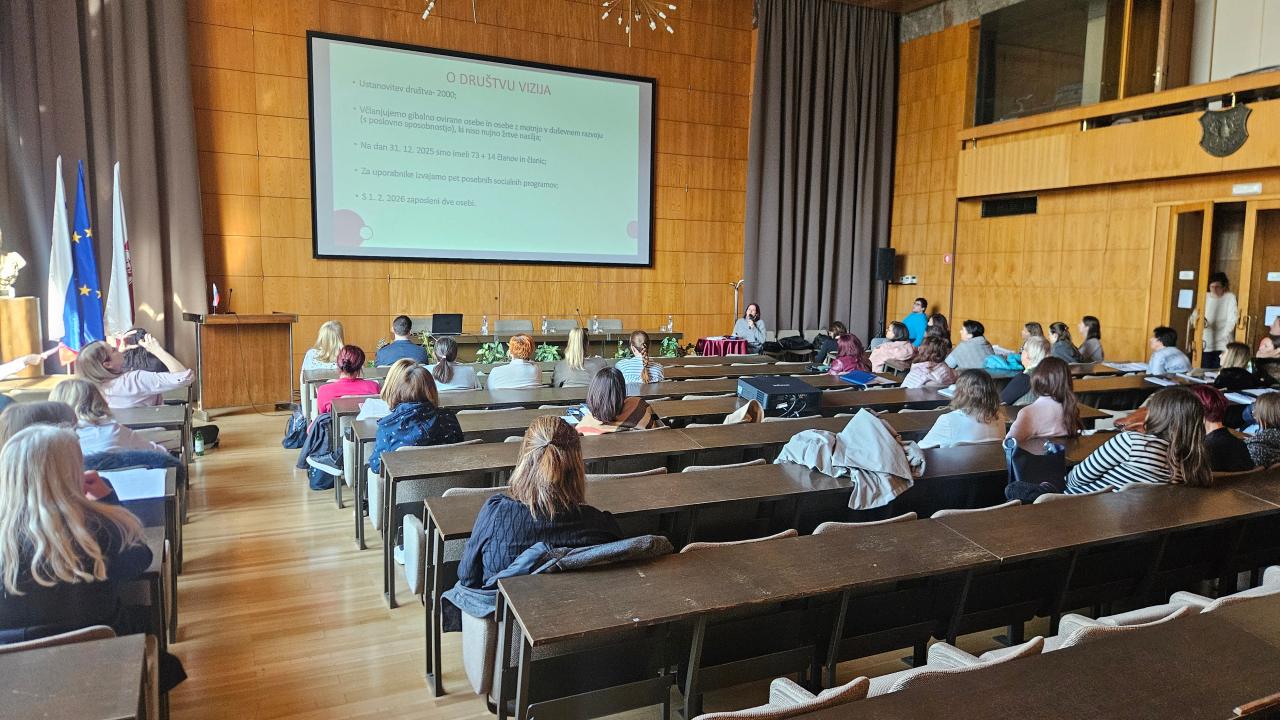
On 19 March 2026, a representative of the Ombudsman, Jerneja Turin, Assistant to the Head of the Human Rights Centre, attended a regional consultation entitled “Is Violence against Persons with Disabilities Really Nonexistent?”, organised by the Gorenjska Social Work Centre. The consultation aimed to raise awareness and improve the recognition of violence against persons with disabilities, as well as to highlight the importance of appropriate responses and cooperation among all stakeholders in creating a safe, respectful and inclusive environment. The Ombudsman welcomes such consultations.
She drew attention to a recent survey by the European Union Agency for Fundamental Rights, which shows that, despite increased attention and certain positive legislative changes, no decline has been observed in violence against women and domestic violence in Slovenia, indicating that additional measures are needed. At the EU level, the survey also shows that women with disabilities face a higher risk of experiencing sexual violence by an intimate partner (17 per cent compared to 6.6 per cent among women without disabilities). Similarly, rates of physical violence are higher (19.1 per cent among women with disabilities compared to 10.6 per cent among women without disabilities).
During a round table held as part of the consultation, Turin presented the work of the Ombudsman in handling petitions, as well as its broader monitoring of the situation, including findings from visits to social care and work centres and training institutions. She pointed to the lack of data on the prevalence, types and causes of violence against persons with disabilities in Slovenia, an issue the Ombudsman has been highlighting for several years. Such data are essential for designing effective policies and measures and for assessing their impact. Particular attention should also be paid to the prevention, identification and treatment of economic and psychological violence.
Turin also stressed the need for appropriate training of professionals working with persons with disabilities and victims of violence, so that they are able to recognise violence and respond appropriately. Raising awareness among the general public is equally important — about what constitutes violence, how to recognise it, where to seek help, and that violence is unacceptable and must be reported when witnessed.
Jerneja Turin, Assistant to the Head of the Human Rights Centre at the Human Rights Ombudsman of the Republic of Slovenia, also emphasised the need for adequate support in everyday life for persons with disabilities and their caregivers. A recent study on violence against older persons also shows that violence is often linked to broader life circumstances, long-term burdens, dependency and social isolation. Systemic improvements and preventive measures could significantly contribute to reducing violence in these areas. She also highlighted the importance of the accessibility of social work centres for persons with disabilities and referred to the Ombudsman’s analysis and its findings in this area.
At the event, a representative of the Vizija Association and several representatives of social work centres also pointed out the lack of crisis accommodation for persons with disabilities, as well as the limited capacity of safe houses for victims of violence from this group, and consequently cases of refusal of accommodation, which the Ombudsman also considers problematic.
 Back
Back